
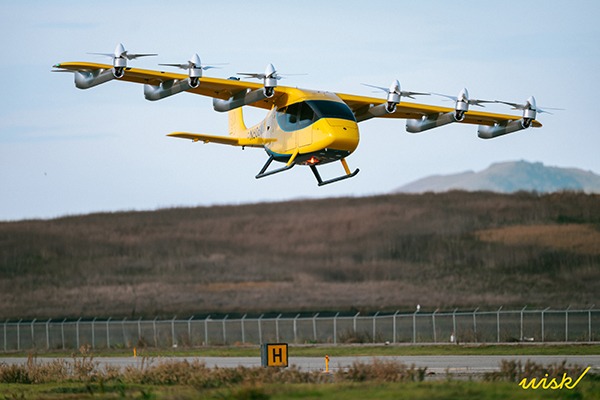
According to the U.S. Department of Transportation (USDOT), Advanced Air Mobility (AAM) is “a rapidly-emerging new sector of the aerospace industry that aims to safely and efficiently integrate highly automated aircraft into American airspace. AAM is not a single technology but rather a collection of new and emerging technologies being applied to aviation, particularly in new aircraft types. AAM is designed to deliver agile, affordable, and accessible flights to all Americans and drive infrastructure development, employment, and innovation.”
So, what does that really mean? It means AAM is going to bring different power technologies, more automation, new air service opportunities, and new business models and, with that, come more/different regulations, funding needs, and airspace integration and evolution amongst other things. Let’s dive into some details!
- Some aircraft will look more like a helicopter, others more like an airplane. Some may be certificated as airplane or helicopter and others may be certificated as a new aircraft category: powered-lift.
- Some AAM aircraft will be fully electric and some will be hybrid (such as hydrogen/electric, JetA/electric, or Sustainable Aviation Fuel (SAF)/electric).
- Some aircraft will be capable of Vertical Takeoff and Landing (VTOL); others will be Short Takeoff and Landing (STOL) or, just simply, Conventional Takeoff and Landing (CTOL).
- Some aircraft will be focused on passenger travel, others on cargo transport, and others on a combination of things, to include emergency response.
- Some operators will use them for shorter, urban flights (Urban Air Mobility or UAM) and others will use them for regional flights (Regional Air Mobility or RAM).
- They will all be more automated than traditional aircraft, but some will still carry pilots (at least for a while) and others will be fully autonomous (may be remotely piloted for a bit).
- To start, most will be certificated to fly under Visual Flight Rules (VFR), but Instrument Flight Rules (IFR) certification will soon follow.
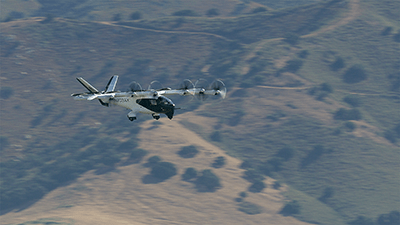
However, to fully enable AAM, the entire ecosystem needs to be considered. While existing infrastructure can be used (runways, taxiways, ramps, heliports, etc), new infrastructure will be needed to unlock many of the expected business models (such as opening up city centers) and, at a minimum, most electric models will require charging stations (and some even hydrogen). Additionally, fully autonomous aircraft will require some level of new technology to operate without human input.
The existing regulatory framework does not always fit the needs of AAM so that is being looked at from multiple angles. Furthermore, the education of the future workforce will need to be modified to accommodate new aircraft certificates, technologies (such as Distributed Electric Propulsion or DEP), more software development, different skills in most trades, etc.
The competition is pretty fierce, but some of the U.S. Original Equipment Manufacturers (OEMs) to follow include:
- Archer Aviation (https://www.archer.com/)
- BETA Technologies (https://beta.team/)
- Electra Aero (https://www.electra.aero/)
- Joby Aviation (https://www.jobyaviation.com/)
- Wisk Aero (https://wisk.aero/)
Advanced Air Mobility (AAM) has the potential to reshape how we fly, live, work, and connect. For more information, visit https://www.transportation.gov/aam.
