
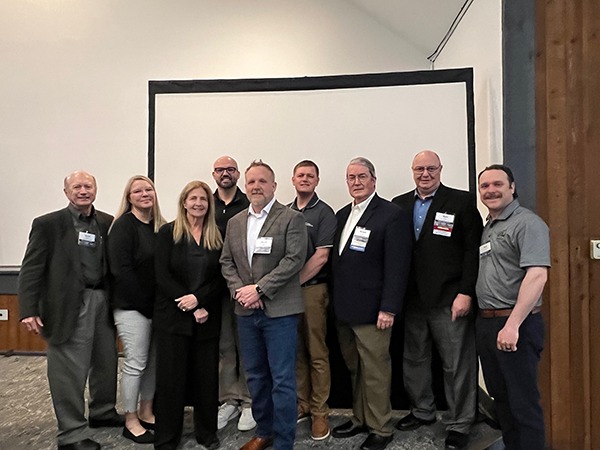
Sponsored by the Minnesota Council of Airports and the Minnesota Department of Transportation, and facilitated by the University of Minnesota Airport Technical Assistance Program (AirTAP).
The 2026 Minnesota Airports Conference was held April 22-24 at Grand View Lodge on beautiful Gull Lake in north central Minnesota, 17 miles north of Brainerd Lakes Regional Airport (KBRD).
Each year, the conference brings together airport managers, engineers, consultants, businessmen and women, and state and federal officials from across Minnesota to connect, collaborate, and strengthen the future of aviation in the state.
This year’s conference program was designed to provide valuable insights for attendees across all areas of airport operations, including a “technical track” focused on engineering, infrastructure, planning, and regulatory updates, and an “airport management track,” which covered leadership, operations, funding, and management best practices.
The keynote speaker was Eric Perkins. Known to many as “Perk,” Eric spent more than two decades as a sports anchor and reporter at KARE 11 in the Twin Cities.
Andrew Wall, Manager of South St. Paul Municipal Airport (SGS), is Chair of the Minnesota Council of Airports (MCOA) Board of Directors. Joe LaRue, President of Prairie Air in Elbow Lake, Minnesota, and Manager of Elbow Lake Municipal Airport (Y63), is President of the Minnesota Aviation Trades Association (MATA), which was invited to hold its annual meeting in conjunction with the conference: http://mnaviationtrades.org/
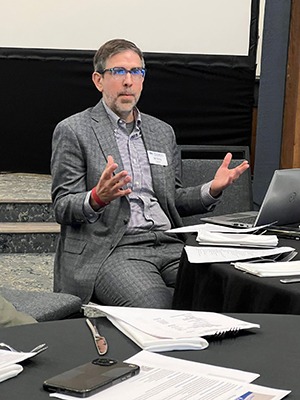
Dave Weiman Photo
Ryan Gaug, Director of the Minnesota Office of Aeronautics, was the guest speaker at MATA’s meeting. Gaug shared legislative issues, along with former Minnesota legislator and MATA board member, Mike Beard.
Gaug stated: “As usual, my focus at this time of the year is on the legislative process and the opportunities and challenges being discussed by our state and federal policymakers. Because we are in the second year of the biennium, there is less attention on budgetary matters compared to last year. This still leaves many important conversations to be had. We anticipate consideration to be given to a capital budget during this session, which typically includes funding for important projects at our airports.
“In reflecting upon last year, we have good reason to celebrate what was a very successful legislative session for aviation. This is in no small part due to our collective efforts in communicating Minnesota’s need for additional aviation investments. Our work is not done, but after the dust settled, there was almost $30 million in new money appropriated for aviation. Kudos to everyone who pitched in to get that done!
“At the national level, we are tracking important discussions in D.C., including what the next FAA reauthorization bill may look like (even though we still have a few years left under the current bill). We recently had the opportunity to visit with staff from the offices of our Minnesota congressional delegation. We shared a list of MnDOT’s federal aviation priorities, including funding (specifically air traffic control tower funding), uses of ADSB technology, the ongoing transition away from PFAS firefighting foams, and Advanced Air Mobility (AAM). Speaking of AAM, I am very excited about the Minnesota Electric Aviation Network (MEAN), Minnesota’s AAM study. This study explores the integration of electric aircraft into the state’s existing aviation infrastructure. The result is a strategic network of airports across Minnesota that are best positioned to support electric aircraft operations within the next decade.”
Gaug reported that MnDOT’s old Aeronautics Office building was sold for $1.8 million. He would like to see those funds stay in aviation but is not sure if they will. Likewise, Gaug would like to see future sales tax revenue derived from aircraft sales and flight training directed to aviation where it should go and not lost in the general fund. Directing revenue which is derived from aviation is one more reason MATA, MCOA and the Minnesota Business Aviation Association (MBAA) need to lobby state representatives through personal contacts and events such as the annual “Aviation Day at The Capitol.”
The MATA board expressed concern during the meeting with the severe shortage of Designated Pilot Examiners (DPEs). The need for DPEs is great, and there are many qualified flight instructors who can provide this service for a reasonable fee, but the FAA limits their participation, mostly to limit FAA personnel time in supervising them, but also to protect DPE territories. MATA will continue to push for more DPEs, and since local Flight Standard District Offices remain unresponsive to this issue, maybe it needs to be raised with FAA Administrator Bryan Bedford and Transportation Secretary Sean Duffy. Especially at a time when the demand for commercial pilots is great, to restrict access to the industry is counterproductive.
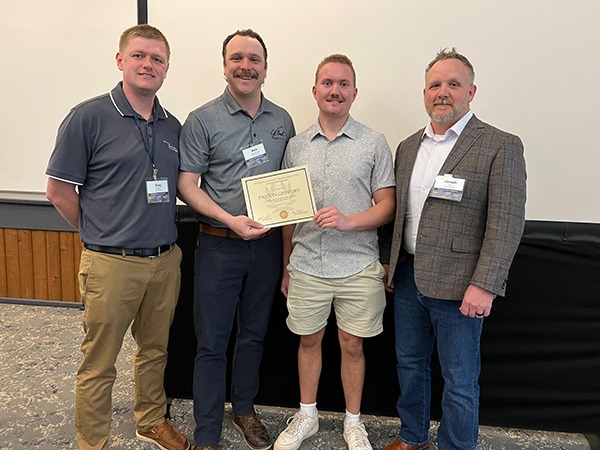
MATA Scholarships
MATA sponsors two flight training scholarships and one maintenance scholarship each year to help Minnesota students enter careers in aviation. These scholarships are available to be redeemed only at MATA-member businesses and aviation schools, ensuring that the investment directly supports organizations committed to Minnesota aviation.
This year MATA had 17 flight scholarship applicants, and four maintenance scholarship applicants, and the criteria for both scholarships included some new parameters.
The selection committee was looking for applicants who showed a sense of community and interest to stay in Minnesota. Additionally, the selection committee was looking for recipients who demonstrated leadership ability.
MATA presented its “Flight Training Scholarships” to Payton Gessford, who is enrolled in flight training at Alexandria Aviation, and Guy Svehlek, who is enrolled in commercial flight training at Academy College. MATA’s “Aircraft Maintenance Technician Program Scholarship” was awarded to Ayden Zinter, a second-year student at Northland Community and Technical College.
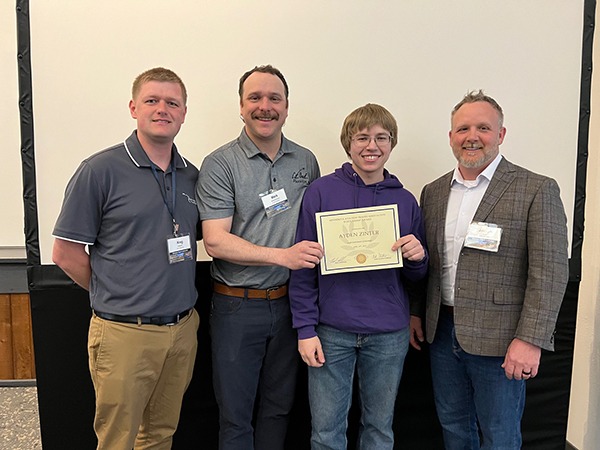
MCOA’s Scholarship & Awards
MCOA presented its “Aviation Student Scholarship” to Erin Walker during its awards luncheon. Walker is attending the University of North Dakota for Commercial Aviation.
MCOA presented its “Project of the Year Award” to St. Paul Downtown Airport (STP) for its Runway 14–32 Reconstruction. The consultant team consisted of SEH, Barr, Element Materials Testing, and PE Services.
Receiving the “Intermediate Large GA Airport Award” was Two Harbors Municipal Airport for its Helgeson Field Airport Terminal Building Replacement project. The consultant team included Bolton & Menk, and DSGW Architecture.
Receiving the “Intermediate Small GA Airport Award” was Elbow Lake Municipal Airport for its Apron Expansion and Taxiway Alpha Construction. Bollig Engineering was the consultant.
Receiving the “Commercial Service Airport Award” was Duluth International Airport (DLH) for its Taxiway A Reconstruction project. The consultant team included SEH, Burns & McDonnell, and Braun Intertec.
Receiving the “Outstanding Leadership In Airport Planning, Environment & Strategic Initiative Award” was Warroad International Memorial Airport for its Targeted Airport Planning Study. KLJ was the consultant.
The MnDOT Office of Aeronautics presented its “Award of Excellence” to Elbow Lake Municipal Airport.
Representing the FAA at the conference was Lindsay Terry, the Airport District Office Manager for FAA-Dakota-Minnesota. Among the budgetary items discussed is a nationwide push for “remote air traffic control towers.” This means that airports too small for a multi-million-dollar air traffic control tower may qualify for a “remote tower.” Several remote towers can be controlled from one central location with less controllers using communication transmitters and cameras. Hopefully airports which currently have towers, but do not have the traffic to justify their cost, will also utilize remote tower technology, saving the federal government money, while still providing airports with adequate safety. Remote towers have proven themselves effective and useful worldwide. Terry urged attendees to contact her with questions at 612-253-4630 or Lindsay.Terry@faa.gov.
What is MATA?
The Minnesota Aviation Trades Association (MATA) unites aviation businesses and professionals throughout Minnesota. Since 1945, MATA has represented fixed base operators, flight schools, aircraft maintenance shops, airports, manufacturers, suppliers, and educators dedicated to safe and ethical aviation business practices. MATA’s purpose is to promote and protect aviation business interests, while sharing information that improves efficiency and professionalism throughout the industry.
What is MATA doing for aviation in Minnesota?
- Advocacy with the MnDOT Office of Aeronautics, Minneapolis FSDO, and state and federal legislators.
- Addressing the shortage and availability of Designated Pilot Examiners (DPE).
- Protecting aircraft owners from surveillance-based fees.
- Annual participation in the Minnesota Airports Conference.
- Communication through Midwest Flyer Magazine, social media and direct member updates.
- Collaboration with partner groups including the Minnesota Council of Airports, Minnesota Business Aviation Association, and National Business Aviation Association.
Why become a MATA member?
- A unified voice for one’s business interests.
- Networking with fellow operators, airports, and educators.
- Access to industry information and regulatory updates.
- Support for aviation workforce growth and development.
- Professional credibility!
How can I join MATA?
Visit: www.mnaviationtrades.org and complete the application.
The 2027 Annual Meeting of the Minnesota Aviation Trades Association will be held during the Minnesota Airports Conference, April 21–23 at The Kahler Grand Hotel in Rochester, Minnesota. The exact date and time of the meeting will be announced.
