
(On Purpose; Not as a Result of an Emergency!)
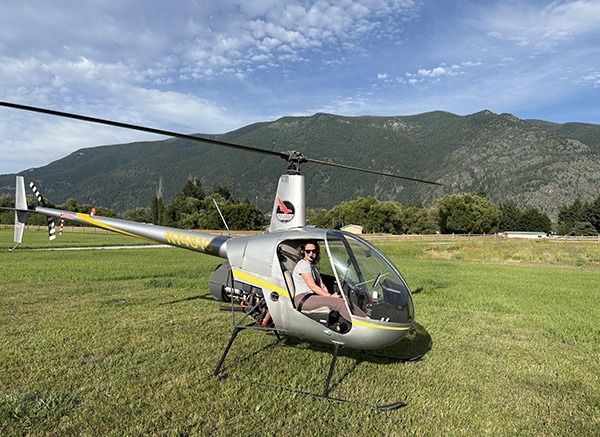
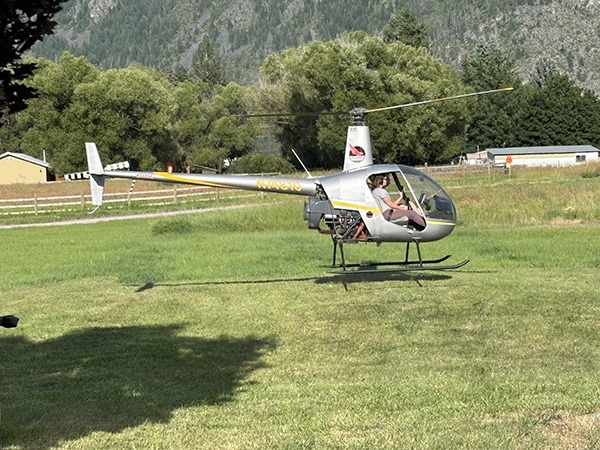
Flying to off-airport destinations can be exhilarating! As you advance in your training or because of your desire for adventure, you may find flying off-airport really fun and rewarding! But, is it legal everywhere in the U.S.? What are the rules to know and follow?
Just so we are all clear, let’s define what “off-airport” means. Flying off-airport means landing or taking off on land or water outside a permitted aviation facility (airport, heliport, etc). A permitted aviation facility can be 1) public owned or private owned, 2) public use, private use, or Prior Permission Required (PPR), and 3) charted or not. But, a permitted facility is registered with the FAA and permitted by the Authority(ies) Having Jurisdiction (AHJ). Therefore, flying off-airport means landing on non-permitted aviation facilities (yes, those exist in some places!), private land, or government land. For the purposes of this article, we are going to focus on land aircraft and landings (not water or seaplanes though those are really fun off-airport as well).
Here are some questions you need to pose yourself:
- What does the FAA say about landing off-airport?
- What does your state say about landing off-airport?
- What does your community (city or county) say about landing off-airport?
- If you’re trying to land on public land, what are the rules?
FAA
You can operate from off-airport locations as long as you can meet 14 Code of Federal Regulations (CFR) Part 91.13 – Careless or reckless operation and 14 CFR Part 91.119 – Minimum safe altitudes: General.
State
You can operate from off-airport locations as long as your state allows you. It varies state by state. I have picked the two book ends as examples:
- Montana: You can operate from off-airport locations. According to Title 67 – Aeronautics, Chapter 1 – General Provisions, Part 2 – Uniform Principles, Section 67-1-204 – Lawfulness of Flight and Landings of the 2025 Montana Code Annotated, flight in aircraft over Montana lands and waters is lawful, unless it is at such a low altitude as to interfere with the then-existing use to which the land or water or the space over the land or water is put by the owner or unless conducted as to be imminently dangerous to persons or property lawfully on the land or water or in violation of the air commerce regulations that have been or may be promulgated by the U.S. Department of Transportation. In fact, it also says aircraft landings and takeoffs from Montana public roads are lawful if proper safety precautions, as approved by the governing jurisdiction of the roads, are taken prior to the landing or takeoff, except as otherwise provided in this section. However, the local governing jurisdiction may not incur liability as a result of an approval. However, a person may not operate an aircraft in a careless or reckless manner so as to endanger the life or property of others and the landing of an aircraft on the private lands or waters of another without consent is unlawful, except in the case of a forced landing. The code does not say anything about aircraft operations needing to be from permitted aviation facilities. Montana also does not have a formal permitting process for aviation facilities.
- Florida: You cannot operate from off-airport locations. Any proposed takeoff/landing from any location for any purpose triggers the permitting process for aviation facilities before aircraft operations can occur unless it is for one of these uses:
- Ultralight landing areas (minus some specific restrictions).
- Helistops used solely in conjunction with a construction project (with very specific criteria), used for mosquito control, or used for emergency services.
- An airport used exclusively for aerial application or spraying of crops on a seasonal basis (with very specific requirements).
Florida has two separate permitting processes for aviation facilities: one for permanent facilities and one for temporary facilities. They are both extensive and involved.
If you are a landowner interested in allowing others to fly into your property, you want to become familiar with the Recreational Use Statute (RUS) in your state. FMI, look up the Recreational Aviation Foundation’s (RAF’s) 50 State Recreational Use Statute Survey.
Local Community
You first need to determine who has jurisdiction over the land you’re intending to land in/out of: Incorporated in a city/town? Non-incorporated in a county/parish? Only the state?
Once you know who is the AHJ, you need to review their rules/regulations/codes/statutes. Again, it is on a case-by-case basis but, generally, the larger the community, the more chances there are restrictions (such as in land use and zoning codes), a permitting process (possibly with Conditional Use Permits (CUPs) required), noise regulations, etc.
Public Land
According to the Aeronautical Information Manual (AIM) 7-5-6, the landing of aircraft is prohibited on lands or waters administered by the National Park Service (NPS), U.S. Fish and Wildlife Service, or U.S. Forest Service (USFS) without authorization from the respective agency. Exceptions include:
- When forced to land due to an emergency beyond the control of the operator;
- At officially designated landing sites; or
- An approved official business of the Federal Government.
Some years ago, I wrote an article about flying to national parks. It is relevant here too although some of it may be out of date now. You can find it at www.airtrails.weebly.com.
The above-mentioned AIM reference does not include Bureau of Land Management (BLM) land; however, 43 CFR Title 6302.20 does. Except as specifically provided in the Wilderness Act, the individual statutes designating the particular BLM wilderness area, or the regulations of this part, and subject to valid existing rights, in BLM wilderness areas you must not 1) build aircraft landing strips, heliports, or helispots or 2) land aircraft, or drop or pick up any material, supplies or person by means of aircraft, including a helicopter, hang-glider, hot air balloon, parasail, or parachute.
Regulations regarding usage of state land vary state-by-state and should be reviewed prior to possible aircraft operations.
Other
Two more things to consider:
- Is it safe just because it’s legal? That should be our second most important consideration after determining that/if it is legal!
- Does your aircraft insurance allow it?
On- or off-airport… fly safe and fly often!
Disclaimer: I am not a lawyer; just a pilot like you! Please do your proper research prior to aircraft operations.
