
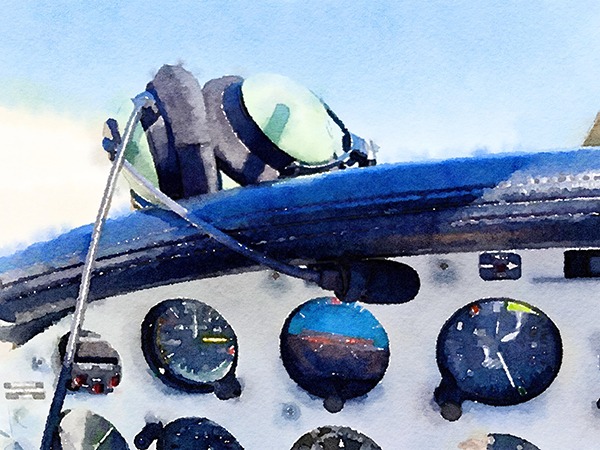
“A post-flight self‑ assessment is the most underrated safety habit in General Aviation.”
This is the fifth article in my series on The Basics of Flying. As I explained in the initial piece posted online in Midwest Flyer Monthly (January 2026), “[t]his should not result in new information being imparted to pilots; instead, it should serve as a refresher course to remind pilots of information they once knew, and can recall again, if prompted.”
A large part of my non-aviation background was enjoying an interesting and satisfying legal career with a large manufacturing company designing and producing heat transfer products for a wide range of applications in global markets.
I was privileged to work with smart, talented people, and I was often exposed to new concepts. One was “Continuous Improvement” (CI), first introduced by Toyota in the early 1950s (thanks to American W. Edwards Deming) and officially documented as part of its Total Quality Management (TQM) philosophy in The Toyota Way 2001. TQM became widely regarded as the benchmark for quality programs and was adopted by companies around the world. Toyota’s TQM principles continue to form the basic DNA of quality systems in use today.
CI is a philosophy that drives organizations to consistently enhance their processes, products, and services through small, incremental changes. It is rooted in the Japanese term “Kaizen,” which translates to “change for the better.” This approach emphasizes the importance of ongoing, minor modifications that collectively lead to significant overall improvement.
Applying CI correctly and consistently leads to proven results. General Aviation (GA) pilots can benefit from CI to incrementally improve both aeronautical decision-making and flying skills.
CI is not unheard of in GA, but it is not emphasized sufficiently and taught for its benefits either.
Debriefing a lesson, a form of CI, is a critical aspect of primary and advanced flight instruction, allowing certified flight instructors (CFIs) to reflect with their students on the learning process and identify areas for improvement. Post-flight debriefs are intended to ensure students are not only meeting minimum performance standards but also, little by little, gaining new insights and skills. Used correctly, through this process, learning from every flight is maximized.
Airline pilots conduct thorough debriefs to ensure safety and efficiency. Military pilots conduct a detailed post-flight debriefing process to analyze and improve performance. Why shouldn’t GA pilots also routinely review their flights through a consistent, repeatable process?
Pilots spend a great deal of time preparing for flights: weather briefings, pre-flight inspections, performance calculations, route planning, and more. Yet one of the most valuable opportunities for learning and safety improvement comes immediately after the engine shuts down. A thoughtful, structured post‑flight self‑assessment helps pilots sharpen judgment, reinforce good habits, identify weak spots, and build a personal safety culture that grows stronger with every flying hour logged.
Unlike checkrides or flight reviews, a post‑flight self‑assessment is private, candid, and entirely for the pilot’s benefit. It is a moment to step back, replay the flight, and ask, “What did I do well? What could I have done better? What will I change next time?” When used regularly, this simple practice becomes one of the most powerful tools for becoming a safer, more confident aviator.
The balance of this article will look at why a post‑flight self‑assessment matters, what to evaluate, and how to turn each flight into a meaningful learning experience.
Why a Self-assessment Matters
Here is why a post-flight debrief, conducted in your aircraft while the engine is still warm, matters. First, memory fades. The details of a flight – especially the subtler ones – scatter quickly. Immediate follow-up fosters self‑awareness and captures recall on closer to a real-time basis.
Second, aviation demands humility. Even experienced pilots make mistakes, overlook details, or fall into complacency. A routine, structured review helps pilots recognize patterns in their own flying – good and bad – and adjust before small issues become big ones.
Third, it reinforces good habits. “Catch yourself doing something right.” Instead of only focusing on what went wrong, identifying what went right is equally valuable. Making good decisions, smooth and correct handling of flight controls, confident “buttonolgy,” proper use of checklists, and professional phraseology in your communications, build on those behaviors for future flights.
Fourth, It supports long‑term proficiency. A pilot who reflects after every flight naturally builds a unique database of lessons learned. This becomes your personal CI process, i.e., “ongoing, minor modifications that collectively lead to significant overall improvement.”
What to Evaluate
The debrief is where valuable learning takes place. Do it even when you are tired, want to get the airplane back in the hangar, secured in the tie-down, or are antsy to attend to passengers or leave the airport.
Now is the time to set aside a few minutes to run through the debrief questions – and the answers which will help cement the flight events and efficiently transfer them from short-term memory to working and long-term memory. When timely recollection of important recent events is interrupted by additional tasks or unrelated thoughts, and time stretches, there is an increased potential for errors in recall.
NASA Reports or Safety of Flight Issues
Although a typical debrief takes only a few minutes, some events may require a more in-depth debrief, such as an event prompting a NASA Aviation Safety Reporting System (ASRS) report or an aircraft mechanical/safety issue. During these debriefings, the pilot should analyze facts and events carefully to obtain all relevant information and answer the following questions:
- What happened?
- When did it happen?
- Where did it happen?
- What factors contributed to the event?
- What can we do differently next time?
A Framework for Post‑ Flight Self‑Assessment
A good self‑assessment is both honest and systematic. The following framework breaks the process into clear categories covering the full scope of a flight – from planning to shutdown.
- Preflight Planning and Preparation
Even though the flight is over, the first step is to look back at how well you prepared.
Questions to consider:
- Did I gather complete and accurate weather information?
- Did I anticipate the right alternate, fuel reserves, and contingencies?
- Was my weight‑and‑balance and performance planning accurate?
- Did I feel rushed or distracted during preflight?
- What can I do differently?
Many in‑flight challenges originate from incomplete planning or rushed activities. If the flight unfolded differently than expected, this is the moment to ask whether the planning was realistic, the time you allotted was adequate, or if assumptions need adjusting.
- Aircraft Handling and Stick‑and‑Rudder Skills
This is the heart of flying, and it deserves a thoughtful review.
Evaluate:
- Crosswind considerations;
- Runway selection;
- Takeoff roll and rotation technique;
- Climb performance and airspeed control;
- Turns, climbs, descents, and trim usage;
- Coordination and rudder input;
- Approach stability;
- Landing flare, touchdown point, and rollout.
Questions to ask:
- Did I use correct control inputs for taxi and takeoff?
- Did I maintain consistent airspeeds?
- Was I ahead of the airplane or playing catch‑up?
- Did I use trim effectively?
- Were my landings predictable and controlled?
- Checklist Discipline and Cockpit Flow
A pilot’s relationship with (use of) checklists says a lot about his or her safety culture.
Reflect on:
- Did I use the written checklist consistently?
- Did I rely too heavily on memory?
- Were any checklist items rushed or skipped?
- Did I routinely monitor engine, battery, and fuel gauges?
- Did I maintain a logical cockpit flow?
- Situational Awareness and Workload Management
Situational awareness is the pilot’s mental map of the flight environment.
Ask yourself:
- Was I aware of my position at all times?
- Did I anticipate airspace, terrain, and traffic?
- Did I locate traffic and understand traffic flow?
- Did I anticipate and manage changing weather conditions?
- Did I manage workload effectively during busy phases?
- Did I feel overloaded at any point and, if so, why?
- Communication and Radio Technique
Clear, concise communication is a hallmark of skilled, experienced pilots.
Evaluate:
- Phraseology, brevity, and clarity;
- Timing of transmissions;
- Ability to anticipate ATC instructions;
- Confidence and accuracy.
Questions to consider:
- Did I step on anyone or miss a call?
- Was my position reporting (location and altitude) accurate?
- Did I sound rushed or uncertain?
- Did I maintain good listening discipline?
- Did I read back ATC instructions correctly and, if necessary, request “say again”?
- Was I questioning or assertive (if required)?
- Decision‑Making and Risk Management
This is the most important category – and often the hardest to evaluate honestly.
Reflect on:
- Readiness/proficiency for the flight;
- Route planning, leg lengths, and times of departure/arrival;
- Familiarity with terrain and obstructions;
- Weather decisions;
- Personal Minimums decisions;
- Fuel decisions;
- Diversion or alternate planning;
- Go/no‑go judgment;
- Mitigation strategies;
- In‑flight choices under pressure;
- Go-around judgment.
Ask yourself:
- Did I make any decisions based on ego or convenience rather than safety?
- Did I feel external pressure – time, passengers, schedule?
- Did I timely confess if lost, or hesitate to use “Mayday” or “Pan-Pan” if in an emergency or urgent situation developed?
- Did I consider alternatives early enough?
- Automation and Avionics Management
Modern cockpits offer powerful tools – but only when used wisely.
Evaluate:
- Glass cockpit, GPS, and autopilot “buttonolgy” and programming accuracy;
- Autopilot usage (too much or too little);
- Mode awareness;
- Fixation on screens;
- Workload reduction vs. workload increase.
Questions to ask:
- Did I rely too much on automation?
- Did I underuse tools that could have helped?
- Did I monitor avionics and systems routinely?
- Did I neglect sufficient ”heads-up” time to see-and-avoid in VFR?
- Did I maintain manual flying proficiency?
- Passenger and Crew Interaction
If passengers were aboard, their experience is part of the assessment.
Reflect on:
- Briefing quality;
- Comfort and communication;
- Managing nervous passengers;
- Maintaining a calm and confident demeanor;
- Managing a smooth flight, with prior notice of climbs, turns, descents, etc.
- Emotional and Physiological Factors
This is the most personal part of the assessment – and often the most revealing.
Ask yourself:
- Was I tired, stressed, or distracted?
- Did I feel anxious or rushed?
- Did I maintain calm during unexpected events?
- Did I feel confident and fully in control throughout the flight?
- Was I engaged, sharp, and proactive?
- Use of the IMSAFE checklist?
- What Will I Do Differently Next Time?
A post‑flight assessment is only valuable if it leads to action.
Here is the key take-away of this article – after each flight, create a simple but effective “short list” of actions:
- One thing to improve;
- One thing to continue doing well;
- One thing to study or practice before the next flight.
A post‑flight self‑assessment is not about criticism – it is about growth. It is a moment of honesty, curiosity, and reflection on what “good airmanship” means. GA pilots who embrace this habit can develop sharper judgment, stronger skills, and a deeper sense of mastery. They become more confident, more prepared and, ultimately, safer aviators.
Every flight tells a story. A thoughtful post‑flight assessment ensures you learn from every chapter.
© Copyright Dean Zakos 2026 All Rights Reserved
DISCLAIMER: Mr. Zakos’s articles should not be used for flight training or misconstrued as instructional material. The articles represent the author’s personal opinions. Readers are urged to always consult with a Certified Flight Instructor and other sources about anything discussed herein.
